Amla vs. Shikakai: Which Herb Is Right for Your Hair Type? (The Ultimate Guide to Natural Hair Care)
Struggling with hair fall or an oily scalp? Discover the difference between Amla and Shikakai. Learn which herb is the best natural shampoo and which is the ultimate hair mask for your specific hair type.
NATURAL HAIR CARE
Amla vs. Shikakai: Which Herb Is Right for Your Hair Type?
(The Ultimate Guide to Natural Hair Care)
Introduction: The Ancient Secret to Modern Hair Health
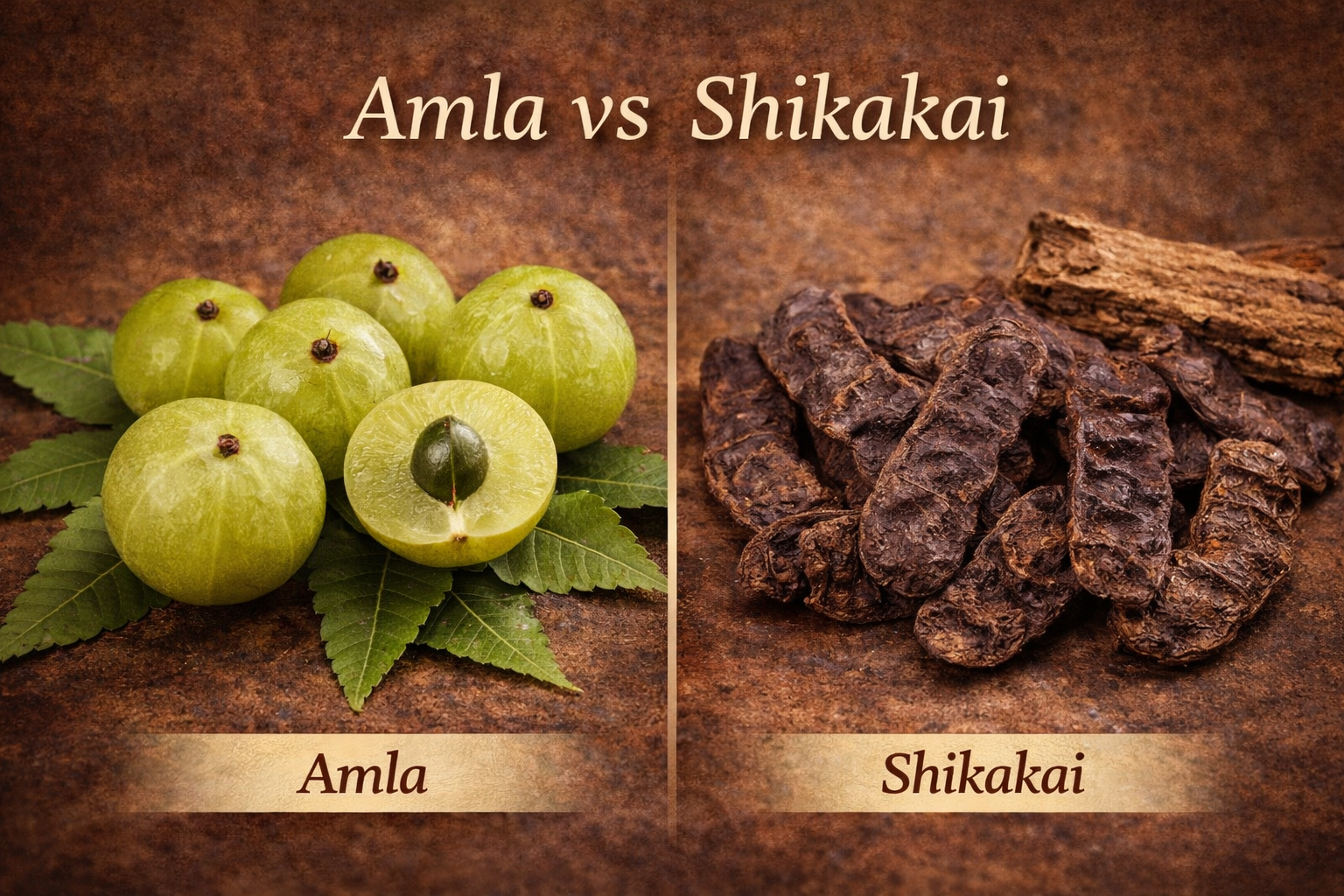
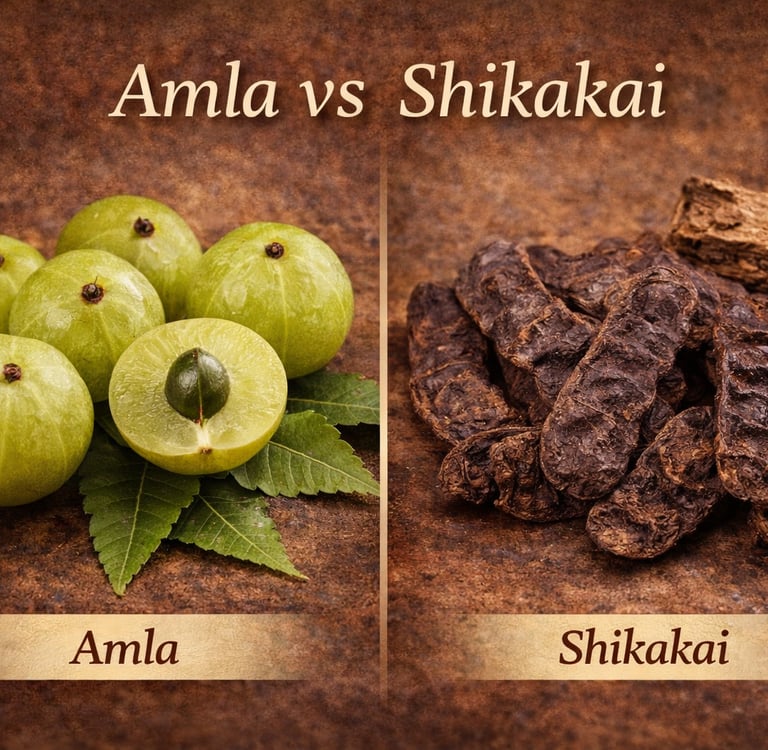
In the world of natural hair care, two herbs stand head and shoulders above the rest: Amla (Indian gooseberry) and Shikakai (Acacia concinna). For centuries, these have been the cornerstone of Ayurvedic hair rituals, promising everything from lush, long locks to a healthy, balanced scalp.
But if you are looking to ditch commercial shampoos filled with sulfates and switch to organic shampoo alternatives, you might be wondering: Which one do I actually need?
While they are often paired together, Amla and Shikakai serve two very different purposes. Using the wrong one for your hair type can lead to dryness or a lacklustre clean.
In this guide, we will break down the differences between these two staple ingredients. You will learn why Amla is the cooling "mask" property that combats hair fall, and why Shikakai is the natural "shampoo" that provides a gentle yet effective cleanse.
What is Shikakai? The Natural Shampoo
Shikakai, which translates to "fruit for hair," is a small, pod-like shrub that has been used in India for generations. Its pH level is remarkably similar to that of human hair (around 5.5 to 6.0), making it one of the gentlest cleansing agents on the planet.
Key Properties:
Low pH: Unlike harsh alkaline shampoos, Shikakai cleanses without stripping the scalp of its natural oils (sebum).
Saponins: It contains natural saponins, which create a mild lather that lifts dirt and excess oil.
Detangling: It acts as a natural conditioner, smoothing the hair cuticle to reduce friction and tangles.
Best For:
Oily scalps
Product buildup
Those looking for a natural, organic shampoo alternative
Fine to medium hair that needs volume without heaviness
What is Amla? The Cooling Hair Mask
Amla is a powerhouse of antioxidants and Vitamin C. In Ayurveda, it is considered a Sheet Virya (cooling) herb. It is not primarily a cleanser; rather, it is a rejuvenator. When applied to the scalp, it has a "mask property"—it penetrates the hair follicles to nourish, strengthen, and cool down inflammation.
Key Properties:
DHT Blocker: High in Vitamin C and antioxidants, Amla helps block DHT (dihydrotestosterone), a hormone linked to hair fall and thinning.
Cooling Effect: It calms scalp inflammation, itching, and redness.
Pigmentation: It can help delay premature greying by boosting melanin production and preserving hair colour.
Best For:
Hair fall control
Dry, itchy, or inflamed scalps
Premature greying
Thick, coarse, or curly hair that needs moisture
Amla vs. Shikakai: The Head-to-Head Breakdown
To help you decide which herb is right for your hair type, here is a comparison based on their core functions.
Feature Shikakai (The Cleanser) &Amla (The Mask):
Primary Role Natural Shampoo, Natural Conditioner & Hair Mask
Hair Fall Cleans scalp to prevent clogging (indirect help)
Directly helps by strengthening roots and blocking DHT
Scalp Type: Oily Scalp, Dry or Combination Scalp
Texture: Mildly astringent; adds volume. Heavy, cooling, and moisturising
Best Use: Washing (1-2 times a week), Deep conditioning treatment (1 time a week)
How to Choose Based on Your Hair Type:
1. If You Have an Oily Scalp & Fine Hair
Choose Shikakai.
If your hair gets greasy 24 hours after washing, you need the gentle astringent properties of Shikakai. It will remove excess sebum without over-drying your ends. Avoid using Amla alone on an oily scalp, as its heavy moisturising properties can sometimes weigh fine hair down or cause buildup if not rinsed properly.
2. If You Suffer from Hair Fall & Dryness
Choose Amla.
If you are finding clumps of hair in your shower drain, Amla is your hero. Its cooling nature soothes the scalp, while its high antioxidant content strengthens the hair shaft from the root. Use it as a hair fall control mask. Mix it with yoghurt or aloe vera to enhance its moisturising effects.
3. If You Have Dandruff & Itching
Combine both,
Dandruff is often caused by a heated, aggravated scalp (Pitta dosha). Amla is excellent for cooling the heat. However, if the dandruff is caused by excess oil, Shikakai is needed to clear the flakes. A 1:2 ratio (more Amla, less Shikakai) works best for dandruff relief.
4. If You Have Curly or Coarse Hair
Combine Them for the Ultimate Routine.
Curly hair needs moisture (Amla) and definition (Shikakai). Use Shikakai to clarify the scalp and remove buildup, followed by an Amla mask to define curls, reduce frizz, and add shine.
The Power of Synergy: Why They Are Better Together
While we are breaking down the differences, it is important to note that in Ayurveda, these two herbs are considered a "power couple." If you are looking to fully transition to an organic hair care routine, using them in sequence is the key to success.
Step 1: Shikakai acts as a natural shampoo, opening the cuticles and cleansing the scalp.
Step 2: Amla acts as the mask/conditioner, closing the cuticles and sealing in moisture.
By using them together, you replicate the full wash-day experience
without exposing your hair to the harsh detergents
found in commercial hair fall solutions.
Conclusion:
Which Herb Should You Buy?
If you are looking for natural solutions for hair problems:
Shikakai, if your main concern is an oily scalp, limp hair, or you want to replace your daily shampoo.
Amla, if your main concern is hair fall, premature greying, or if you have a dry, irritated scalp.
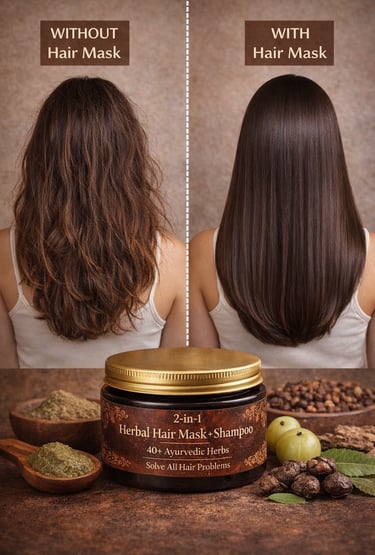
Ultimately, for most hair types, the answer isn’t either/or—it is both. By understanding the cleansing power of Shikakai and the nourishing mask properties of Amla, you can customise your hair care routine to achieve the healthiest hair.
Amla vs. Shikakai: Which Herb Is Right for Your Hair Type?
(The Ultimate Guide to Natural Hair Care)
Introduction: The Ancient Secret to Modern Hair Health
In the world of natural hair care, two herbs stand head and shoulders above the rest: Amla (Indian gooseberry) and Shikakai (Acacia concinna). For centuries, these have been the cornerstone of Ayurvedic hair rituals, promising everything from lush, long locks to a healthy, balanced scalp.
But if you are looking to ditch commercial shampoos filled with sulfates and switch to organic shampoo alternatives, you might be wondering: Which one do I actually need?
While they are often paired together, Amla and Shikakai serve two very different purposes. Using the wrong one for your hair type can lead to dryness or a lacklustre clean.
In this guide, we will break down the differences between these two staple ingredients. You will learn why Amla is the cooling "mask" property that combats hair fall, and why Shikakai is the natural "shampoo" that provides a gentle yet effective cleanse.
What is Shikakai? The Natural Shampoo
Shikakai, which translates to "fruit for hair," is a small, pod-like shrub that has been used in India for generations. Its pH level is remarkably similar to that of human hair (around 5.5 to 6.0), making it one of the gentlest cleansing agents on the planet.
Key Properties:
Low pH: Unlike harsh alkaline shampoos, Shikakai cleanses without stripping the scalp of its natural oils (sebum).
Saponins: It contains natural saponins, which create a mild lather that lifts dirt and excess oil.
Detangling: It acts as a natural conditioner, smoothing the hair cuticle to reduce friction and tangles.
Best For:
Oily scalps
Product buildup
Those looking for a natural, organic shampoo alternative
Fine to medium hair that needs volume without heaviness
What is Amla? The Cooling Hair Mask
Amla is a powerhouse of antioxidants and Vitamin C. In Ayurveda, it is considered a Sheet Virya (cooling) herb. It is not primarily a cleanser; rather, it is a rejuvenator. When applied to the scalp, it has a "mask property"—it penetrates the hair follicles to nourish, strengthen, and cool down inflammation.
Key Properties:
DHT Blocker: High in Vitamin C and antioxidants, Amla helps block DHT (dihydrotestosterone), a hormone linked to hair fall and thinning.
Cooling Effect: It calms scalp inflammation, itching, and redness.
Pigmentation: It can help delay premature greying by boosting melanin production and preserving hair colour.
Best For:
Hair fall control
Dry, itchy, or inflamed scalps
Premature greying
Thick, coarse, or curly hair that needs moisture
Amla vs. Shikakai: The Head-to-Head Breakdown
To help you decide which herb is right for your hair type, here is a comparison based on their core functions.
Feature Shikakai (The Cleanser) &Amla (The Mask):
Primary Role Natural Shampoo, Natural Conditioner & Hair Mask
Hair Fall Cleans scalp to prevent clogging (indirect help)
Directly helps by strengthening roots and blocking DHT
Scalp Type: Oily Scalp, Dry or Combination Scalp
Texture: Mildly astringent; adds volume. Heavy, cooling, and moisturising
Best Use: Washing (1-2 times a week), Deep conditioning treatment (1 time a week)
How to Choose Based on Your Hair Type:
1. If You Have an Oily Scalp & Fine Hair
Choose Shikakai.
If your hair gets greasy 24 hours after washing, you need the gentle astringent properties of Shikakai. It will remove excess sebum without over-drying your ends. Avoid using Amla alone on an oily scalp, as its heavy moisturising properties can sometimes weigh fine hair down or cause buildup if not rinsed properly.
2. If You Suffer from Hair Fall & Dryness
Choose Amla.
If you are finding clumps of hair in your shower drain, Amla is your hero. Its cooling nature soothes the scalp, while its high antioxidant content strengthens the hair shaft from the root. Use it as a hair fall control mask. Mix it with yoghurt or aloe vera to enhance its moisturising effects.
3. If You Have Dandruff & Itching
Combine both,
Dandruff is often caused by a heated, aggravated scalp (Pitta dosha). Amla is excellent for cooling the heat. However, if the dandruff is caused by excess oil, Shikakai is needed to clear the flakes. A 1:2 ratio (more Amla, less Shikakai) works best for dandruff relief.
4. If You Have Curly or Coarse Hair
Combine Them for the Ultimate Routine.
Curly hair needs moisture (Amla) and definition (Shikakai). Use Shikakai to clarify the scalp and remove buildup, followed by an Amla mask to define curls, reduce frizz, and add shine.
The Power of Synergy: Why They Are Better Together
While we are breaking down the differences, it is important to note that in Ayurveda, these two herbs are considered a "power couple." If you are looking to fully transition to an organic hair care routine, using them in sequence is the key to success.
Step 1: Shikakai acts as a natural shampoo, opening the cuticles and cleansing the scalp.
Step 2: Amla acts as the mask/conditioner, closing the cuticles and sealing in moisture.
By using them together, you replicate the full wash-day experience
without exposing your hair to the harsh detergents
found in commercial hair fall solutions.
Conclusion:
Which Herb Should You Buy?
If you are looking for natural solutions for hair problems:
Shikakai, if your main concern is an oily scalp, limp hair, or you want to replace your daily shampoo.
Amla, if your main concern is hair fall, premature greying, or if you have a dry, irritated scalp.
Ultimately, for most hair types, the answer isn’t either/or—it is both. By understanding the cleansing power of Shikakai and the nourishing mask properties of Amla, you can customise your hair care routine to achieve the healthiest hair.